

If you wear contacts, you may know the feeling all too well—that gritty, scratchy sensation that makes you want to blink constantly. The team at River City Vision Center understands this challenge. Your vision might even get a little blurry, a common sign of dry eye syndrome. This discomfort can make you wonder if contact lenses are even an option for you.
You don’t have to choose between clear vision and comfortable eyes. The right contacts for dry eye are typically daily disposable lenses made from materials like silicone hydrogel, which allow more oxygen to reach your eyes and retain moisture throughout the day.
Why Your Eyes Feel Dry with Contacts
When your eyes feel dry and irritated with contacts, it’s more than just a minor annoyance. It can affect how clearly you see and how comfortable you feel. You might notice specific symptoms when your lenses contribute to dryness.
- Stinging or burning sensations
- Blurry or fluctuating vision
- A feeling like something is in your eye
How Some Lenses Worsen Dryness
Not all types of contact lenses are created equal, and some can make dry eye symptoms more noticeable. The material of an older-style lens can act like a tiny sponge, absorbing the natural tears that keep your eyes moist. This is one of the main reasons contacts can dry out, leaving your eyes feeling parched.
Certain lenses can also limit the flow of oxygen to your cornea—the clear front part of your eye. Without enough oxygen, your eyes can feel tired and irritated. Some lens shapes may even get in the way of your natural blinking, which is how your eyes spread moisture.
What to Look For in Contacts If You Have Dry Eye
When you’re looking for contacts that work well with dry eye, the lens’s technology and materials make a big difference. Focusing on a few key features can help you find a more comfortable fit for your daily life.
Lens Material & Water Content
Modern contact lenses often use innovative materials designed for comfort. Specialty contact lenses, for example, often use silicone hydrogel. This material creates a soft, flexible lens that allows plenty of oxygen to reach your eye, helping keep it healthy and reducing the dry feeling.
Some lenses feature water gradient technology, which means the lens surface has a very high water content—almost like a cushion of moisture. Others are made from materials that resist deposit buildup, keeping the lens surface smooth and clear.
High Oxygen Permeability
Think of oxygen permeability as the “breathable” of a contact lens. Lenses that let more oxygen reach your eye help maintain its natural state. This is important for your long-term eye health and your immediate comfort.
When your eyes can breathe properly, you’re less likely to experience the redness and irritation associated with dryness. A more breathable lens supports your eye’s health, helping you wear your contacts comfortably for longer periods.
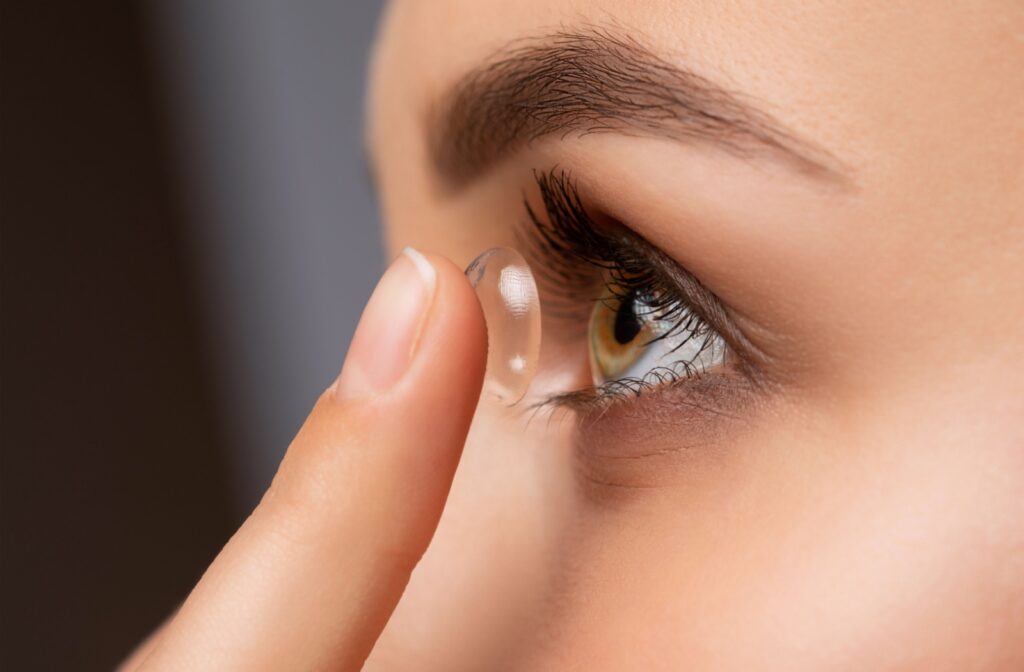
Contact Lenses for Dry Eye Comfort
Several brands design their contact lenses specifically for people who experience dryness. Your optometrist can help you explore different contact lens brands that use various technologies to help your eyes stay hydrated and comfortable all day long.
Tips for More Comfortable Contact Lens Wear
Beyond choosing the right lens, a few simple habits can make a huge difference in how your eyes feel. Incorporating these tips into your routine can help you manage dryness and enjoy clearer, more comfortable vision.
- Use rewetting drops that are approved for use with contact lenses.
- Follow the 20-20-20 rule to reduce digital eye strain—every 20 minutes, look at something 20 feet away for 20 seconds.
- Always handle your lenses with clean, dry hands to avoid irritation and follow proper care instructions.
Get a Professional Contact Lens Fit
Finding the perfect contact lens isn’t a one-size-fits-all process. Your eyes have a unique shape and specific needs. A professional fitting helps you find a lens that feels good and gives you clear vision.
During a fitting, you can try different lenses to see what works for you. An optometrist on the team will check how the lens fits on your eye and how well you can see with it. This helps confirm your prescription is just right for your vision and lifestyle. The team at River City Vision Center is ready to help you find a comfortable solution for your vision needs. Schedule a contact lens exam with an optometrist in Jacksonville or Orange Park to explore your options.