
Have you noticed yourself holding menus or your phone farther away just to see the words clearly? This common change in your vision can be frustrating, especially if you already wear contacts to see objects at a distance. At River City Vision Center, we want you to know that you don’t have to juggle your contacts and a pair of reading glasses: There are options that are more convenient.
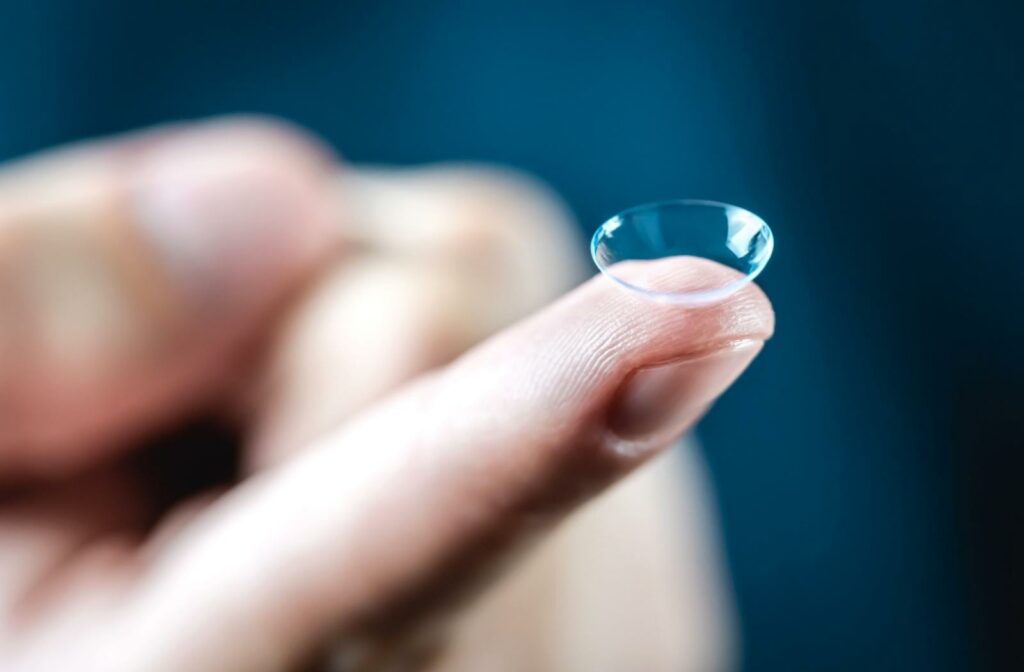
Multifocal contact lenses are lenses that contain multiple prescriptions in a single lens to help you see clearly at all distances, near, far, and in-between.
A Simple Look at Multifocal Contacts
When many people think of contact lenses, they think that they’re designed to help people see clearly at 1 distance. But a multifocal contact lens, like a progressive lens in glasses, is a lens designed to help you see at multiple distances.
This is especially helpful for people with an age-related vision change called presbyopia. This vision change happens for many people after age 40, making nearby objects blurry and leading many people to hold their phone or a menu at a distance.
Because multifocal contact lenses let you see at multiple distances, you can read a text message and then look across the room to the TV, all without switching to reading glasses.
Multifocal vs. Single Vision Lenses
Your current contacts are likely single-vision lenses, which means they have 1 prescription to correct your vision at a single distance. Multifocal lenses differ because they are designed with multiple prescription zones. These zones work together to give you clear vision whether you’re looking at something near, far, or at a middle distance.
How Multifocal Lenses Work for Your Vision
As a type of specialty contact lens, multifocals use a clever design with different zones set for different distances. When you wear them, your eyes naturally look through the part of the lens you need for the task at hand. Your brain learns to select the most relevant visual information, making the transition natural with time.
Common Lens Designs
Most multifocal lenses use 1 of 2 main designs. Concentric designs feature a series of rings that alternate between near and distant powers. Aspheric designs have a more gradual shift in power from the center of the lens to the edges, helping your vision change smoothly between different distances.
Types of Multifocal Contact Lens Options
Today’s multifocal contacts are available in many forms, with soft lenses being a popular choice. They come in different materials and wear schedules to fit your lifestyle. One of our optometrists can perform a contact lens exam and fitting to help you explore the different options and find the right match for your eyes.
Daily Disposable Lenses
For convenience, daily disposable lenses let you start with a fresh, clean pair every morning. You just toss them out at the end of the day, no cleaning or storage solutions required (other than hand washing, of course). This can be a great option for people with busy schedules or sensitive eyes.

Reusable Lenses
Reusable lenses are another choice, typically replaced every 2 weeks or once a month. These contacts require nightly cleaning and safe storage in a contact lens case. Following a routine with proper contact lens care is important to keep your eyes comfortable and healthy.
The Adjustment Period and What to Expect
When you first start wearing multifocal contacts, your brain needs a little time to adapt to the new way of seeing. It’s normal to experience some slight blurriness or shadows as your eyes get used to them. You might also notice some glare or halos around lights at night, which usually improves as you adjust.
Tips for a Smooth Transition
To help your eyes adapt, try to wear your new lenses as much as possible in the beginning. Resisting the urge to switch between your contacts and glasses can speed up the process. It’s also helpful to talk with our optometrist in Jacksonville about your experience so they can make any needed adjustments.
Find Out if Multifocals Are Right for You
Curious if multifocal contacts could work for you? The first step is to have a conversation with an eye doctor during your comprehensive eye exam. During this appointment, our team can check your prescription, evaluate your eye health, and take precise measurements of your eyes to find a lens that fits well and provides clear vision.
Good Candidates for Multifocal Lenses
Multifocal contacts are often a great fit for people who need vision correction for both distance and near tasks. They are also popular among those with an active lifestyle who find switching to reading glasses a hassle. They offer freedom and flexibility for many daily activities.
When Another Option May Be a Better Fit
While multifocals work for many, they may not be the right solution for everyone. If you have a high level of astigmatism or certain eye health conditions, another type of correction might be more suitable. Your specific job or hobbies may also have unique visual demands that an optometrist can help you address.
Schedule Your Consultation
If you’re ready to explore whether multifocal contact lenses can simplify your vision needs, our team at River City Vision Center is here to help. An optometrist can answer your questions and help you determine if this is the right option for you. Schedule a consultation and start seeing clearly at every distance.